drawing of Sea Island - Sea Island Heritage Society logo

Our Past is your Present!

We are a non-profit organization focused on promoting, preserving, and being a strong, active resource for all things of heritage value on Sea Island in Richmond, British Columbia. Join us to learn about the history of Sea Island and its residents, past and present.

Newsletter

Chinese Pioneers of Sea Island

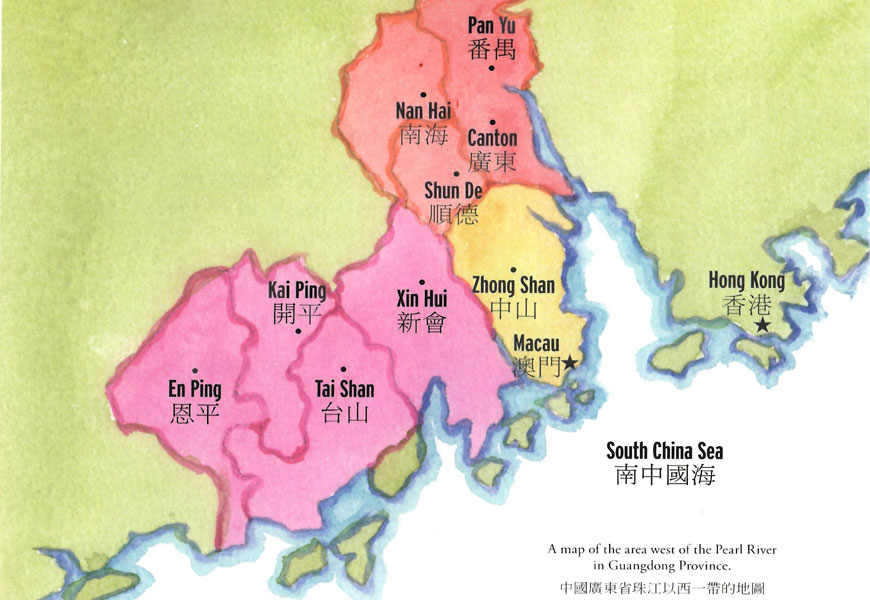
map of Guangdong Province in China

Map of the area west of the Pearl River in Guangdong Province, China
(Inside Chinatown, Ancient Culture in a New World, Amos and Wong, 2009)

About Sea Island

Most of the early Chinese who came to Canada were from Guangdong Province in Southern China where most were farmers. By the 1850s, Southern China was ravished by war, drought and famine. To feed their families, many Chinese men fled across the ocean, leaving their wives and children behind.

From 1858 to 1885, a significant number of Chinese labourers and farmers came to Canada for a better livelihood and to help complete the Canadian Pacific Railway (CPR) across British Columbia. The Workingmen’s Protection Association (later known as the Anti-Chinese Association) tried to get the federal government to ban the use of Chinese labourers to build the CPR across British Columbia. In 1880, it was estimated that no more than 400 Caucasian men were available for employment on the railway. Hence, in May 1882, Prime Minister John A. Macdonald told the people of British Columbia if they wanted the railway finished within a reasonable time, there must be no such step against Chinese labour. By the end of 1882, of the 9,000 railway workers, 6,500 were Chinese. Hundreds of Chinese railway workers died due to accidents, winter cold, illness and malnutrition.

In 1885, the federal government, under pressure from the BC government, passed theChinese Immigration Act, 1885 to discourage Chinese immigration. The government first started charging Chinese immigrants a head tax of $50 ($1,626.25 in 2025). The tax was increased to $100 (approximately $2,638.04 in 2025) in 1901 and increased one more time to $500 ($17,925.74 in 2025) in 1903.

Chinese Exclusion Act

As head taxes failed to curb Chinese immigration, the federal government passed theChinese Immigration Act, 1923, commonly known as theChinese Exclusion Act which came into effect on July 1, 1923 (Dominion Day). Not only did the Act not permit any person of Chinese origin to enter Canada for 24 years, but all Chinese persons living in Canada, even those born in Canada, had to register with the government or risk fines, detainment or deportation. Dominion Day (later Canada Day) became known as Humiliation Day for the Chinese community. The federal government repealed theChinese Exclusion Act on May 14, 1947.

Chinese families

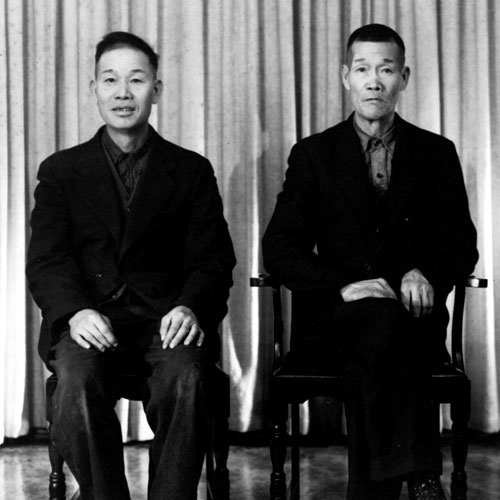
During those years, many Chinese males moved to Sea Island, part of the city of Richmond in British Columbia, where the present-day Vancouver International Airport is located. One-hundred and fifteen known Chinese males were living on Sea Island in 1901 as per the 1901 Canadian Census. Twenty-two were farmers, forty-nine were labourers, one was a gardener, forty were cannery workers, one was a farmhand and two were domestics. A few of the farmers established themselves, leased farmland from European settlers and remained on Sea Island where they raised their family. The Sea Island Heritage Society identified six pioneer Chinese families from the MAH clan or married into the MAH clan: MAH Bing, MAH Fong, MAH Look, MAH Wing Toi and brothers WONG Fang and WONG Fee. The MAH families and the WONG brothers married to Chinese women from the MA/MAH clan were related as a family, beyond being part of the MAH clan. This is their stories.

Naming Conventions

The convention for traditional families of Chinese origin was surname first, followed by given names. A woman’s name traditionally depended on her marital status. When unmarried, her name was as given, surname and given names. When she married, the given portions were dropped and her given names were replaced by Shee. Shee (also Si, Sze, She, Shi, etc.) means roughly “woman from the clan of”, not “Mrs”. The younger generations of Chinese Canadians have adopted the Canadian naming conventions of given names first and surname last. The Society opted to write the names of the early Chinese family members in the traditional way as found on their government documents. Where younger descendants were located, the Society followed the Canadian naming conventions of given names first and surname last.

The Sea Island Heritage Society did extensive research on each Chinese family and located descendants of a few of the families.
The longer version of each family story can be made available upon request.

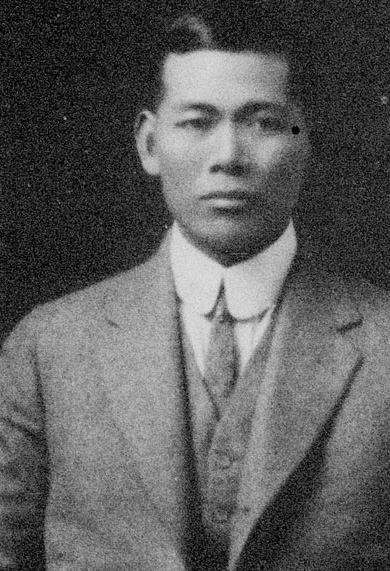
head shot of MAH Bing

MAH, Bing (1879-1949)

WONG, Cheun Ho (1897-1937)

MAH Bing, innovative Chinese pioneer farmer

MAH Bing, also known as MAH Poy Tun, arrived in British Columbia in 1900 and initially settled on Sea Island where he worked on the Frasea Farm (Grauer farm) milking cows with two of his brothers. Wilfred MAH, son of MAH Bing and Wong Chuen Ho said that MAH Bing had six brothers in Canada. With his help, we know that MAH Back Yow (also known as MAH Sum Kai or MA Sun Kow) lived and farmed on Sea Island until his family was expropriated for the expansion of Vancouver International Airport. We also know that MAH Lim was one of MAH Bing's brother and that MAH Lim had a family in China but died alone in Canada. The Society has not determined if these two brothers are the ones who worked with MAH Bing milking cows on Sea Island.

MAH Bing was born on August 1, 1879, to MAH Sim Keu and WONG Shee in the village of Ping On in China. MAH Bing left a first wife and two children behind, a son named Quoon (unknown details) and a son named MA Yam Yan Foster (1917-0000) who later immigrated to the United States. MAH Bing's second wife, WONG Chuen Ho, also known as WONG Shee, Mrs. MAH Bing and MAR June, arrived in Canada aboard the C.P.R. boat on December 23, 1909. WONG Chuen Ho was born in the village of Gow Long in Guangdong Province in about 1897.

MAH Bing and WONG Cheun Ho had eleven children born in Canada. MAH Gim Wan, the son born between MAH Gim Main and MAH Wilfred died at two months old. The first two Canadian-born children, MAH See Kee "William or Billy" (1914-1964) and MAH Toy Gee "Emily" (1915-2014), were born on Sea Island. MAH Yew Gee "Betty (1917-2005), MAH Hung Gee "Polly" (1919-2003), MAH See Quon "Charles or Charlie" (1921-1959), MAH Moy Gee "Mary" (1923-2019), MAH Gim Main "Ming", later MARR Bing Gregory (1925-1991), MAH Gim Wan (1927), MAH Shin Wilfred (1932-present), MAH Bo Gee "Rose or Rosie" (1934-2018) and MAH Jenn Gee "Jean or Jeannie" (1936-1991) were all born on Lulu Island in Richmond.

In approximately 1917, MAH Bing bought his first farm, a 120-acre farm in the Brighhouse area on Lulu Island, on No. 3 Road, across from the old Municipal Hall and across from Richmond High School (area of present-day Brighouse Park on the south side of Granville Avenue, west of No. 3 Road). A Chinese person owning land was extremely rare in British Columbia at the time. MAH Bing sold the farm in the Brighouse area, and in 1918 bought the 160-acre farm bordered by Francis Road to the north, Williams Road to the south, No. 1 Road to the east and the dike to the west where his family farmed until he passed away in 1949. MAH Bing and some members of his family often returned to Sea Island to visit and hunt.

MAH Bing also owned a rooming house - the MAH Pon Kai at 231 Union Street, near Chinatown in Vancouver. MAH Bing's son, Wilfred and a few of his siblings lived at the rooming house for a few years when they were younger. Wilfred said that all the MAHs of Sea Island were relatives of MAH Bing, and they would often meet up at the rooming house on Sunday. Sometimes there would be twenty or so farmers getting together.

WONG Chuen Ho passed away on October 26, 1937. She was 40-years old. She is buried in the Mountain View Cemetery in Vancouver. MAH Bing passed away on October 10, 1949. He is buried in the Hillside Section at the Forest Lawn Memorial Park in Burnaby.
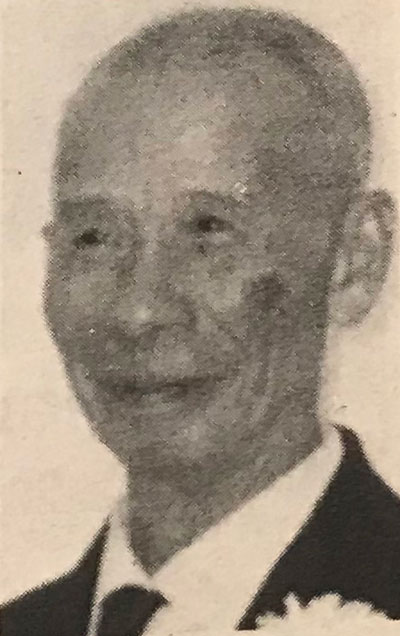
head shot of MAH Fong

MAH, Fong (1885-1975)

ENG, Ling (1913-1999)

MAH Fong, venerable member of the MAH clan

MAH Fong came to Sea Island in 1907 at the age of 21. In a 1970 interview with the Richmond Review, MAH Fong said he followed his father and brothers who came to Sea Island before him and established a farm in the bush and treed land of Sea Island.

MAH Fong was born on September 15, 1885, to MAH Sum Ling and FONG (given names not known) in China. MAH Fong left a first wife behind. MAH Fong was never able to bring his first wife to Canada. They had three daughters, HONG (or WONG) Yue Sim, who eventually immigrated to the United States, and two daughters who remained in China, MAH Sun Tai and MAH Toi Tai. They had an adopted son, MAH Suey Tin who immigrated to Canada in 1950 at the age of 17 years old, the same year MAH Fong became a Canadian citizen.

ENG Ling, MAH Fong's second wife, immigrated to Canada around 1955. ENG Ling was born on February 2, 1913, in China. MAH Fong and ENG Ling had one son, believed to be TOM Yuk Yin. ENG Ling operated Ling's vegetable stand at No. 5 and Cambie Road in Richmond before MAH Fong retired in 1970 and they moved to North Vancouver.

MAH Fong and his family leased 110-acres in various locations on Sea Island. MAH Fong said the delta land was good to him and rewarded his hard work. For the last ten years of his farming career, MAH Fong farmed 54-acres which he leased from the Musqueam First Nations on Sea Island, at the curve of Ferguson Road where it turned into Iona Island.

Many Sea Islanders have fond memories of attending Chinese New Year's celebrations at MAH Fong's. By 1969, MAH Fong and ENG Ling had bought a property at 130 Abercrombie Drive in the Cora Brown subdivision. In 1970, like most Sea Islanders, they were exproriated. MAH Fong retired from farming and moved to North Vancouver with his wife where they operated a grocery store until he became ill and passed away in 1975.

MAH Fong passed away on April 11, 1975. He is buried in the Summit Section at the Forest Lawn Memorial Park in Burnaby. ENG Ling passed away in Vancouver on January 23, 1999. She is buried in the Garden of Love Section, also at Forest Lawn Memorial Park.
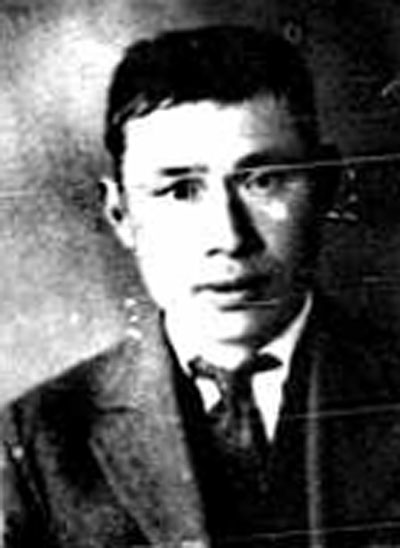
head shot of MAH Look

MAH, Look (1879-1963)

GIN, Shee (1874-1946)

MAH Look, Chinese pioneer farmer

MAH Look came to Canada aboard the Empress ship on May 22, 1895, and settled on Sea Island. MAH Look was born on March 26, 1879, in the village of Ping On, in the province of Guangdong in China. MAH Look's wife, GIN Shee (MAH Shou) was born in about 1874 in the village of Gow Long, also in Guangdong Province. She arrived in Vancouver aboard the Empress of Japan ship on July 3, 1909. GIN Shee arrived with two children, MAH Hong who was 13-years old and MAH Woo Fong who was 8-years old.

MAH Look and GIN Shee had eight children, all born on Sea Island between 1903 and 1923. MAH Wah (1903-1931) was the first son born on Sea Island, followed by MAH Moi "May" (1910-2000), MAH Young (1912-1948), MAH Jean (1914-1978), MAH Yew, also known as MAH Neil Fong (1915-1978), MAH Ong Nee "Nina" (1916-2007), MAH Chong "James" (1919-2006), and MAH Donald (1923-1979).

MAH Look's family had a small home and a large farm on the east side of Shannon Road near the Acme Cannery, in the southwest corner of Sea Island. Their address was listed as 220 Shannon Road, and up until 1947, 340 Shannon Road.

GIN Shee passed away on January 14, 1946. MAH Look passed away on March 20, 1963. Both passed away in Vancouver, BC and are buried side-by-side in the Hillside Section at the Forest Lawn Memorial Park in Burnaby, BC.

Click any of the buttons below to read more about each subject.

Not much is known about MAH Wing Toi other than the memories of some Sea Islanders and Wilfred MAH, son of MAH Bing. He is believed to be related to MAH Fong and MAH Bing. MAH Wing Toi farmed on the Musqueam reserve on the northwest corner of Sea Island, off Ferguson Road and Shannon Road, just like MAH Fong did.

MAH Wing Toi was not married and had no children. During the WWII era, when there was a shortage of farm labour with men gone to war and the women working in factories, some children from Sea Island worked on Ferguson Road for MAH Wing Toi. They weeded the carrot field for 10 cents an hour.

MAH Wing Toi was listed as a farmer living at 120 Ferguson Road on Sea Island, both in the 1938-39 and 1944 telephone directory.

We know a bit more about WONG Fang and his brother WONG Fee, vegetable farmers on Sea Island, than we do MAH Wing Toi but still need to learn more.

It is not known when the WONG brothers came to Canada.

WONG Fang was born on February 20, 1892, to WONG Poo Won and LEONG Shee in China. WONG Fang was a native of the village of Xintingli in Guangdong Province. WONG Fang was married to MA Heung. It is unknown if they had children.

WONG Fee was born on November 20, 1876, to WONG Poo Won and LEM Shee in China. WONG Fee was married to MAH Shee and living at 536 Grauer Road on Sea Island when he passed away on October 7, 1954. It is unknown if WONG Fee had any children.

In his Sea Island Memories, Ken McDONALD said:

WONG Fee and WONG Fang farmed on the south side of Grauer Road on rented land across from the LAINGs. WONG Fee could be heard for half a mile if the wind was right, geeing and hawing his horse while cultivating. Later, they got a tractor and an old iron-age potato planter. WONG Fee was on the back of the planter one time and tried to poke a seed potato down the chute, so his finger was planted along with the potatoes.

Through the early Canadian censuses of 1901, 1911, 1921 and 1931, and some of the notes in the Society's Collection along with other research, the Society learned of many Chinese men who lived, worked and died on Sea Island.

The information on each Chinese male is often scarce, with incomplete names part of the censuses, making it more difficult to tell their story. The Society wanted to give each person a voice and created a story listing each name as found and provided as much information as was available.

The Society relied on numerous legal documents, summaries of interviews and websites, along with the recollection of past Sea Islanders and a few descendants of MAH Look and MAH Bing to write their stories. Each Chinese immigration document was located through Library and Archives Canada or through the Vancouver Public Library. Birth, death and marriage certificates were obtained through the Royal BC Museum genealogy section. Photos of the tombstones were obtained through the cemetery or a member of the Society attended and took the photographs.

The Society retained a copy of all sourcing documents and photographs used to write the stories. All are available upon request.