Sea Island
Sea Island is nestled between the north arm and middle arms of the Fraser River in British Columbia. It is part of the City of Richmond. Once an island with thriving communities, most residents have been expropriated for the expansion of the Vancouver International Airport (YVR). The Burkeville neighbourhood, first built during the WWII effort, is the only remaining residential area on Sea Island. The Coast Salish peoples were the first to come to Sea Island to fish, hunt and collect berries, establishing summer camps and year-long homes primarily on the northwest corner of the island. The year-long homes were moved to different locations along the coast as needed. There is evidence of middens on Sea Island suggesting villages or permanent homes existed in one place for more than a year. Sea Island is also a place rich in the history of flying, but the many improvements to YVR were not without controversy.
-

Boeing
In 1939 Boeing Aircraft of Canada built a huge manufacturing plant beside the middle arm of the Fraser River on Sea Island for the World War II effort. When first opened, the plant employed 175 people. The Sea Island plant built PBY Catalina Aircraft for off-shore air patrols, and the middle section of the B-29.
Boeing Plant
-

Burkeville
Between 1941 and 1944, the Burkeville housing project was created after the Wartime Housing Ltd. was granted authority to build 300 temporary houses for Boeing plant workers. Burkeville is the only remaining residential area on Sea Island to this day.
Burkeville
-
Canneries
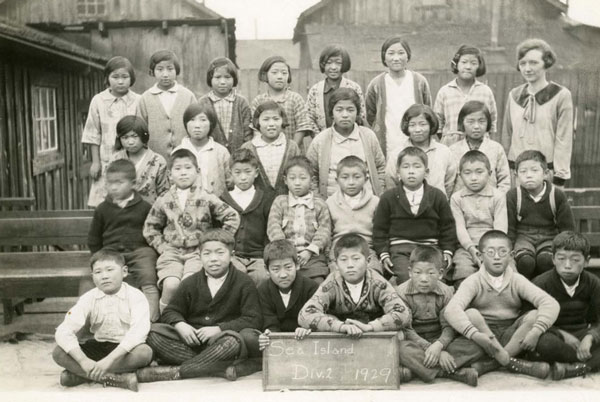
Before World War II, Sea Island had a thriving Japanese community on the south shore of Sea Island, where many worked at the Vancouver Cannery and Acme Cannery or as fishermen. In 1942, as the Japanese people were sent to internment camps, the canneries closed and the cannery-owned housing was destroyed.
Canneries
-

Chinese Pioneers
Many Chinese males moved to Sea Island in the late 1800s, early 1900s leading to six known pioneer Chinese families from the MAH clan or married into the MAH clan settling and becoming farmers on the island. As Chinese individuals were not allowed to own land at the time, they leased land from European settlers.
Chinese Pioneers
-

Cora Brown
After World War II, tracts of land were set aside on Sea Island for returning veterans. One of these was the Cora Brown subdivision, located at the north end of Sea Island. Around 1960, another smaller subdivision was built to the west of Cora Brown on the other side of McDonald Road. The two neighbourhoods were entwined.
Cora Brown
-
Eburne
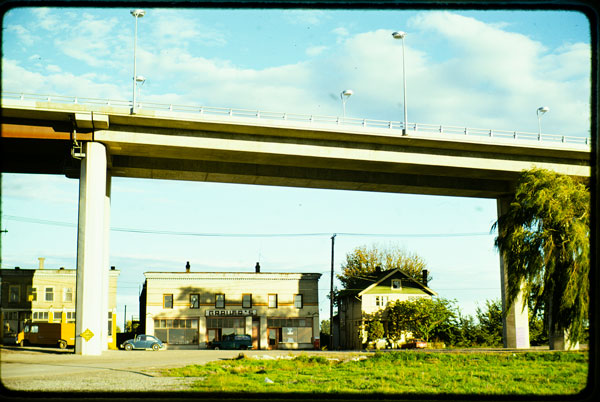
Eburne was one of the earliest communities in Richmond. Eburne started on the Vancouver side of the Fraser River, in what is presently known as the Marpole area and expanded to Sea Island where the MacArthur-Glen Designer Outlet is now located. It was named after Harry Eburne.
Eburne
-
YVR
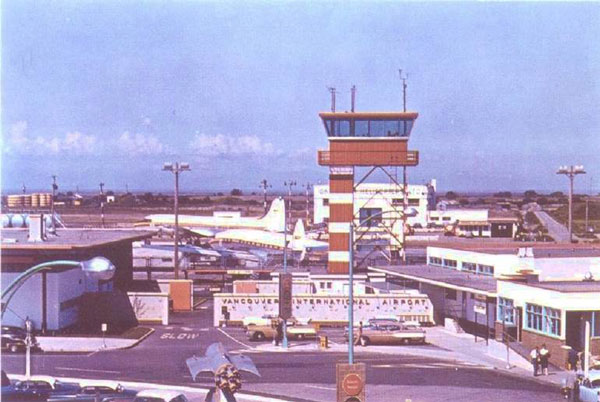
YVR opened in 1931 as the Vancouver Civic Airport and Seaplane Harbour. During WWII, it was operated by the government as RCAF Station Sea Island. In 1948, it was officially named the Vancouver International Airport (YVR). From its inception in 1928 to today, all farmland and residential areas were expropriated for the many expansions of the airport except for Burkeville.
Vancouver International Airport